
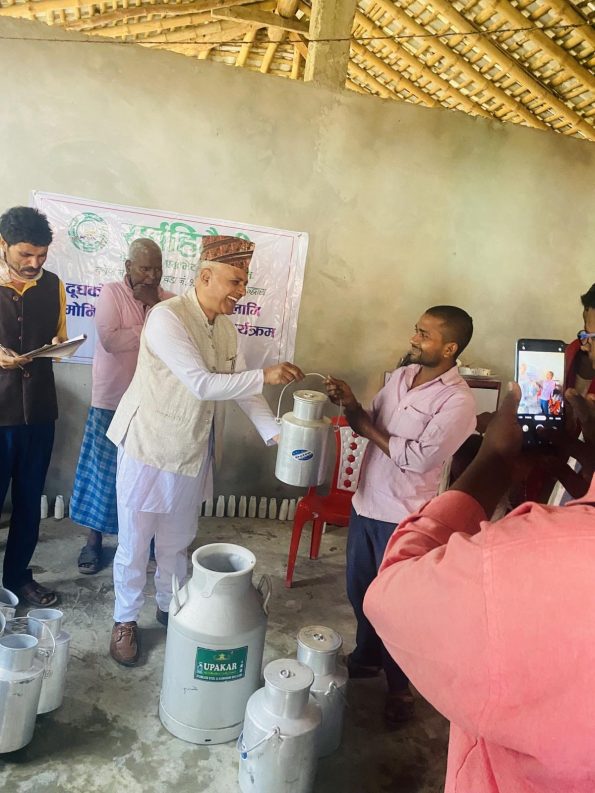
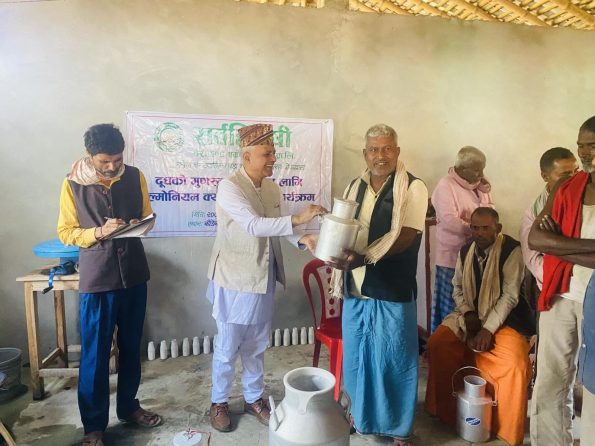
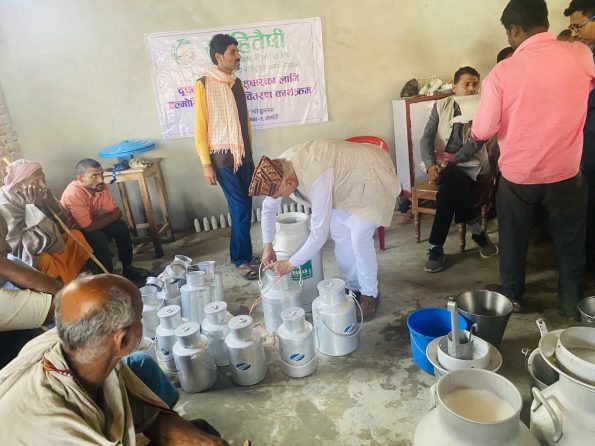

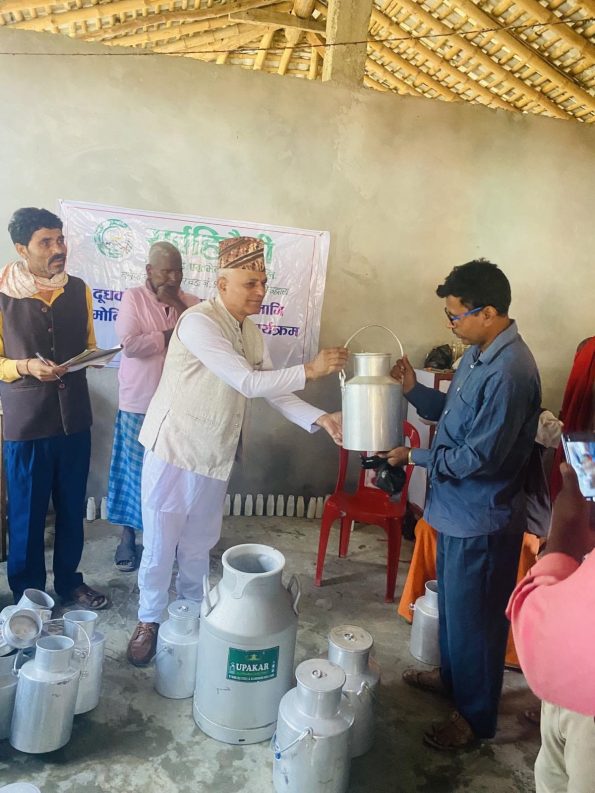

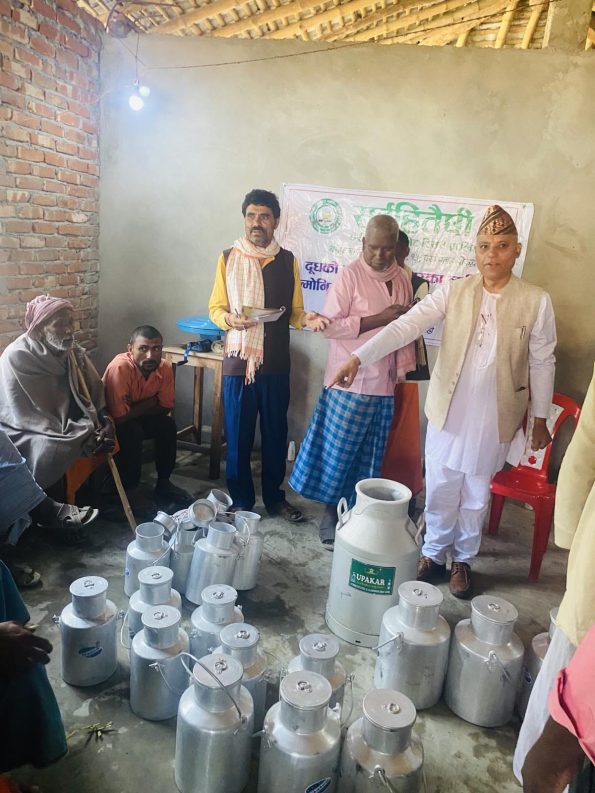







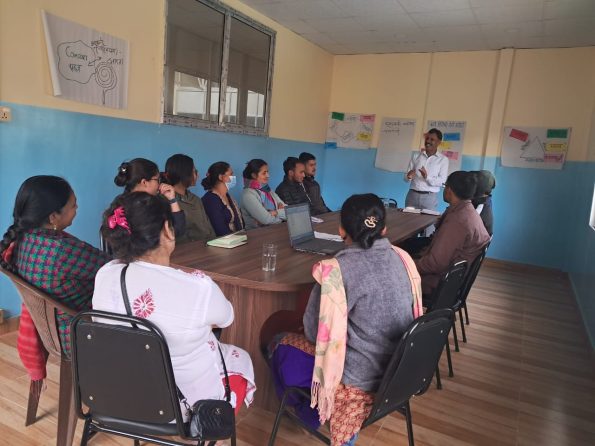
मितिः २०७९ चैत्र २४ गते
स्थानः कौडेना गाउँपालिका-१, सर्लाही
]]>1. Nutrition and Feeding: Proper nutrition is the foundation of good health for dairy cows. Farmers work closely with nutritionists to formulate balanced diets that meet the specific needs of their herd at different stages of life and lactation. High-quality forage, supplemented with grains and minerals, provides the essential nutrients cows need for optimal health and milk production.

2. Regular Veterinary Care: Routine veterinary care is essential for preventing and managing diseases in dairy cows. Farmers work with veterinarians to develop herd health protocols that include vaccinations, deworming, and regular health checks. Early detection of health issues allows for timely intervention and treatment, minimizing the impact on individual cows and the overall herd.
3. Comfortable Living Conditions: Cows that are comfortable and stress-free are healthier and more productive. Dairy farmers invest in comfortable bedding, well-ventilated barns, and adequate space for their cows to move and socialize. Proper ventilation and temperature control help prevent respiratory problems and heat stress, particularly during hot summer months.

4. Disease Prevention: Preventing disease outbreaks is far more effective and economical than treating sick animals. Farmers implement biosecurity measures to minimize the risk of introducing infectious diseases to their herd, such as restricting visitor access, quarantining new arrivals, and maintaining strict hygiene protocols. Additionally, proper sanitation of milking equipment and facilities helps prevent mastitis and other udder infections.
5. Monitoring and Data Analysis: Modern dairy farms utilize technology to monitor individual cow health and performance metrics. Automated systems track milk production, feed intake, activity levels, and even rumination patterns, providing valuable insights into each cow’s well-being. Farmers can use this data to identify early signs of illness, optimize feeding strategies, and make informed management decisions.

Conclusion: Maintaining optimal herd health is a multifaceted endeavor that requires dedication, expertise, and ongoing commitment from dairy farmers. By prioritizing nutrition, veterinary care, comfortable living conditions, disease prevention, and data-driven management practices, farmers can ensure their herd remains healthy, happy, and productive. Ultimately, a thriving dairy herd not only benefits the animals but also contributes to the sustainability and success of the farm as a whole.
]]>1. Rotational Grazing: Rotational grazing involves dividing pastures into smaller sections and rotating the herd through these sections on a regular basis. This practice not only prevents overgrazing and soil erosion but also allows the pasture grasses to recover and thrive. By promoting healthier pastures, rotational grazing contributes to higher-quality forage for the cows and reduces the need for supplemental feed.

2. Nutrient Management: Managing nutrients is crucial for sustainable dairy farming. Instead of allowing manure to accumulate and potentially pollute waterways, many farmers are implementing nutrient management plans that involve proper storage, application, and utilization of manure as fertilizer. Some farms even utilize anaerobic digesters to capture methane from manure and convert it into renewable energy, further reducing their carbon footprint.
3. Renewable Energy Sources: To reduce reliance on fossil fuels and minimize greenhouse gas emissions, dairy farmers are increasingly turning to renewable energy sources such as solar, wind, and biogas. Solar panels can be installed on barn roofs to generate electricity for farm operations, while wind turbines can harness wind energy to power milking parlors and other facilities. Biogas systems not only generate electricity but also produce heat for heating barns and hot water.

4. Precision Agriculture: Advancements in technology have enabled dairy farmers to practice precision agriculture, optimizing resource use and minimizing waste. GPS-guided tractors and drones can be used to precisely apply fertilizers and pesticides, reducing runoff and minimizing environmental impact. Additionally, sensors and data analytics software can help farmers monitor soil health, crop growth, and animal behavior, allowing for more informed decision-making.
5. Conservation Practices: Beyond the farm gate, many dairy farmers are actively participating in conservation programs aimed at protecting natural habitats and wildlife. This may involve planting riparian buffers along waterways, restoring wetlands, or implementing practices to minimize erosion and runoff. By stewarding the land responsibly, dairy farmers can help preserve biodiversity and ensure the long-term health of ecosystems.

Conclusion: Sustainable practices are not just buzzwords in the dairy industry; they are essential for the future viability of farming operations and the health of our planet. By embracing practices such as rotational grazing, nutrient management, renewable energy, precision agriculture, and conservation, dairy farmers can reduce their environmental footprint while also improving the welfare of their animals and the quality of their products. As consumers increasingly demand sustainable and ethically produced food, these practices will only become more integral to the success of dairy farming enterprises worldwide.
]]>


